
Your Daily Macronutrients
Frequently Asked Questions – Macronutrient Calculator
What are macronutrients?
Macronutrients (macros) are the primary nutrients your body requires in large amounts to produce energy and maintain bodily functions: carbohydrates, proteins, and fats.
Why is tracking macros better than just counting calories?
While total calorie intake dictates weight gain or loss, your macronutrient balance determines your body composition, preserving muscle mass during weight loss and optimizing physical performance.
What is the recommended ratio of protein, carbs, and fats?
Standard balanced macros are around 40% carbs, 30% protein, and 30% fat. However, ratios vary depending on your goals: muscle building requires higher protein, while endurance training benefits from higher carbohydrates.
How many calories are in each macronutrient?
Protein and carbohydrates each provide 4 calories per gram, while dietary fats contain 9 calories per gram.
Understanding Macronutrients: Proteins, Carbohydrates, and Fats
Macronutrients are the three primary energy-providing nutrient groups required by the human body in large daily quantities: proteins, carbohydrates, and dietary fats. Unlike micronutrients (vitamins and minerals), macronutrients directly provide calories to power metabolic functions, tissue repair, hormone production, and physical activity. A macronutrient calculator helps tailor your caloric intake into optimal proportional targets based on your specific fitness objectives.
The Roles of the Three Key Macronutrients
Each macronutrient serves a unique biological purpose within your body and contributes a specific caloric value per gram:
- Protein (4 Calories per Gram): Essential for building, repairing, and maintaining lean muscle tissue, supporting immune function, and manufacturing vital enzymes and hormones. Adequate protein intake is particularly crucial during weight loss to prevent muscle wasting.
- Carbohydrates (4 Calories per Gram): The body’s preferred and most efficient primary energy source. Carbohydrates break down into glucose, fueling central nervous system activity, high-intensity athletic performance, and glycogen storage in muscle tissue.
- Dietary Fats (9 Calories per Gram): Critical for regulating cellular structure, hormone synthesis (such as testosterone and estrogen), brain function, and absorbing fat-soluble vitamins (A, D, E, and K).
Popular Macronutrient Distributions and Diets
Depending on individual fitness goals, dietary preferences, and metabolic sensitivities, macronutrient ratios can be customized into several structured split profiles:
- Balanced Standard Ratio (40% Carbs / 30% Protein / 30% Fat): A versatile, highly sustainable distribution suitable for general health maintenance, moderate exercise, and gradual body recomposition.
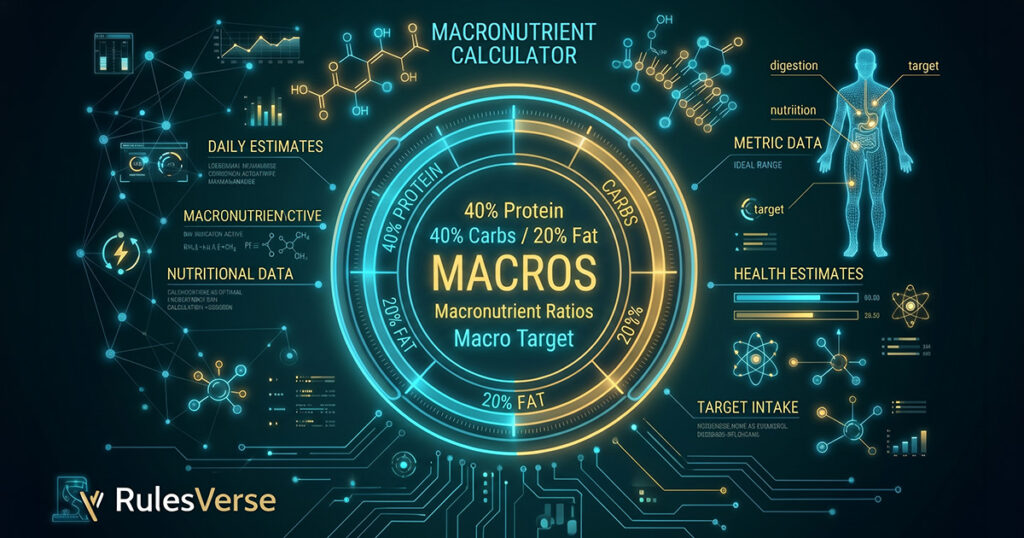
- High Protein / Fat Loss (40% Protein / 30% Carbs / 30% Fat): Prioritizes muscle retention and satiety during an aggressive caloric deficit, helping suppress hunger while optimizing muscle preservation.
- Low Carbohydrate / Ketogenic (5% Carbs / 25% Protein / 70% Fat): Drastically restricts carbohydrate intake to force the metabolic system into ketosis, utilizing ketone bodies from fat stores as the primary cellular energy source.
- High Carbohydrate / Athletic Endurance (55% Carbs / 25% Protein / 20% Fat): Designed for high-volume endurance athletes requiring continuous muscle glycogen replenishment for prolonged training performance.
Key Factors for Setting Your Macro Ratios
When using our macronutrient calculator, consider the following key physiological variables when selecting your ideal target distribution:
1. Activity Level and Exercise Type
Resistance training and high-intensity athletics demand higher protein and carbohydrate availability, whereas sedentary lifestyles require lower relative carbohydrate thresholds to avoid excess energy storage.
2. Personal Dietary Tolerance
Individual insulin sensitivity and digestive comfort vary greatly. Adjusting carbohydrate and dietary fat ratios within your calorie target allows you to build a diet plan that is easy to sustain long term.
Frequently Asked Questions About Macronutrient Tracking
Why track macronutrients instead of just counting total calories?
While total calorie balance governs overall weight loss or gain, your macronutrient breakdown determines your body composition—specifically whether weight change comes from fat loss or muscle gain. Optimizing protein and fat ensures healthy hormone balance and muscle retention while managing body composition.
Do I need to hit my macro targets with 100% precision every day?
No, complete perfection is not required. Aiming for within 5 to 10 grams of your target protein, carbohydrate, and fat limits daily will produce excellent, sustainable results over time.
Explore Our Health & Fitness Tools
Check out our other free online calculators and precision tools:
- Atomic Clock – View real-time, millisecond-accurate Coordinated Universal Time (UTC).
- BMI Calculator – Check your Body Mass Index and target weight categories.
- Calorie Calculator – Calculate your Total Daily Energy Expenditure (TDEE).
- Ideal Weight Calculator – Determine your target body weight based on medical formulas.
- Water Intake Calculator – Find your ideal daily hydration requirements.